


Accident in Ospedaletto Euganeo: when lack of safety becomes tragedy
12 January 2026
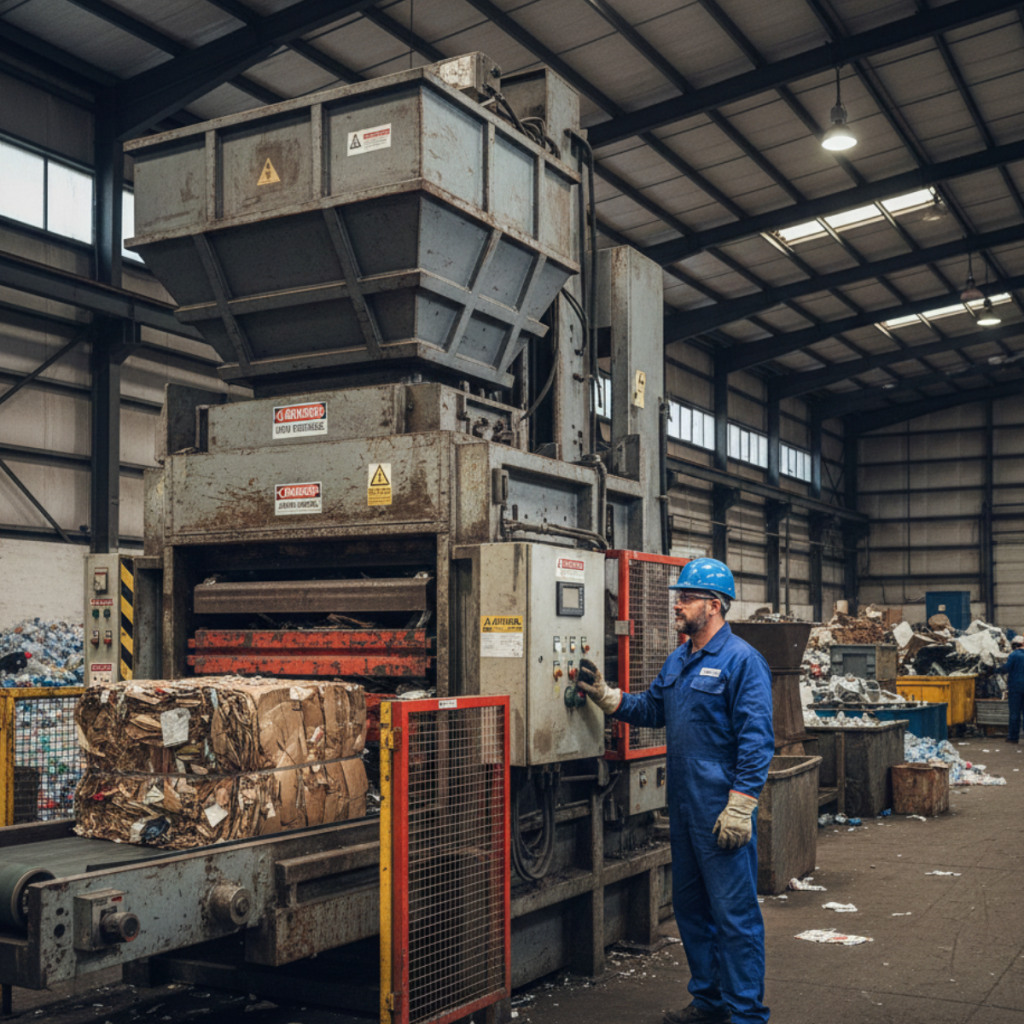
Once again, the news brings us tragic news: a fatal accident at work has shaken the Padua community. The tragedy involving a 59-year-old worker, who was carrying out maintenance work on a waste press in Ospedaletto Euganeo, in the province of Padua, is a painful reminder that safety is never optional.
The Carabinieri from the Este station, Suem 118, and technicians from Spisal of Ulss 6 Euganea arrived on the scene and began investigations to clarify the dynamics of the accident and verify compliance with safety regulations.
It is at times like these that the importance of machine compliance becomes urgently apparent.
SAFETY REQUIREMENTS AND THE MACHINERY DIRECTIVE
In Italy and Europe, the regulations governing health and safety at work are clear. The Machinery Directive 2006/42/EC (and the future Machinery Regulation) establishes the Essential Health and Safety Requirements (EHSR) that all machinery must comply with in order to be placed on the market and used.
The primary responsibility lies with the manufacturer, who must design, build, and document the machine so that it is inherently safe. However, safety is a continuous process that also involves the user (the employer), who must ensure that the equipment in use is maintained in compliance, undergoes proper risk assessment, and is used by adequately trained personnel.
In the case of complex or outdated machines, doubts may arise regarding the correct implementation of safety measures, compliance with new regulations, or proper maintenance. Ignoring these issues exposes the company to unacceptable legal, operational, and, above all, human risks.
THE CRUCIAL ROLE OF ECM
In this scenario, companies have a key technical partner at their disposal: Ente Certificazione Macchine (ECM).
ECM does not limit itself to formal checks, but provides testing, inspection, and certification services that:
- Verifies Technical Compliance: Performs tests, analyses, and checks on machinery (and related technical documentation) to ensure full compliance with the Essential Safety Requirements of the Machinery Directive.
- Identify Residual Risks: Help identify any critical issues or deficiencies in protections, safety devices, and control systems.
- Supports Compliance: Provides a path for older or modified machines (covered by the Work Equipment Directive, Legislative Decree 81/08) to comply with current standards.
Timely intervention by an independent third party is an act of diligence that not only protects the company from penalties, but also demonstrates a concrete commitment to protecting the lives and physical integrity of workers.