


Safety of Stationary Waste Containers: Focus on the UNI EN 13071-1 Standard
8 April 2026
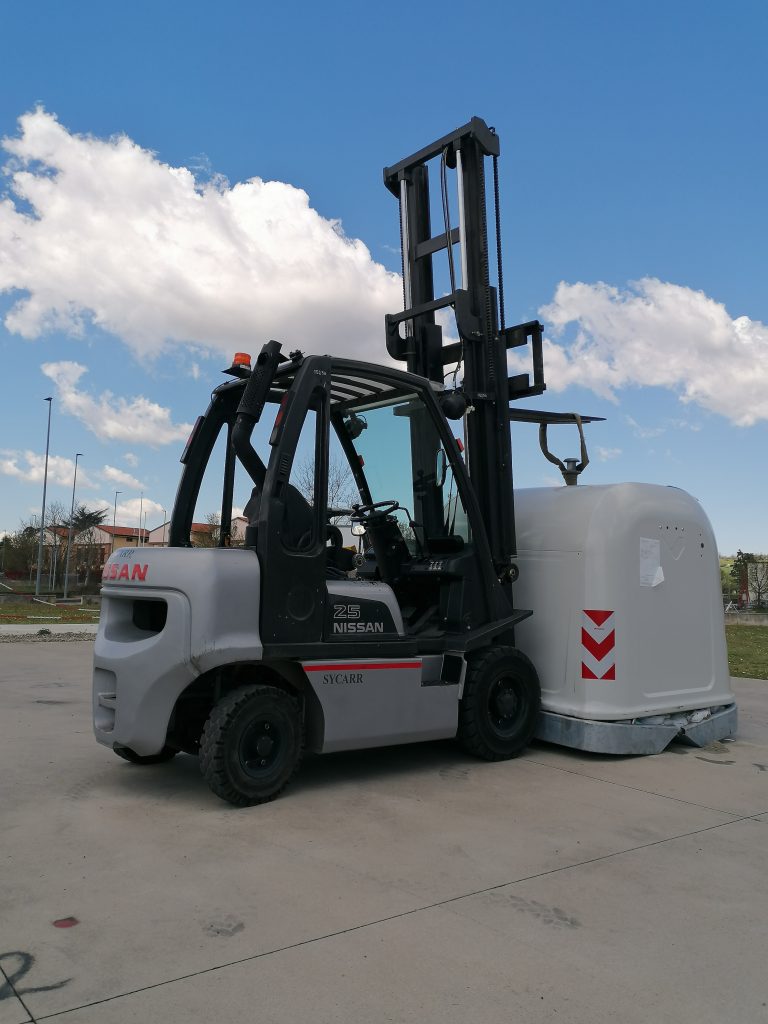
Urban waste management requires equipment that is not only functional but, above all, safe for both operators and citizens. The UNI EN 13071-1:2019 regulation represents the reference standard for top-lifted waste containers, defining rigorous requirements for mechanical resistance and stability testing. In particular, clauses 6.3.2 and 6.3.3 outline the load test protocols, which are essential for ensuring the structural integrity of the container under stress.
STRUCTURAL RESISTANCE: THE LIFTING TEST
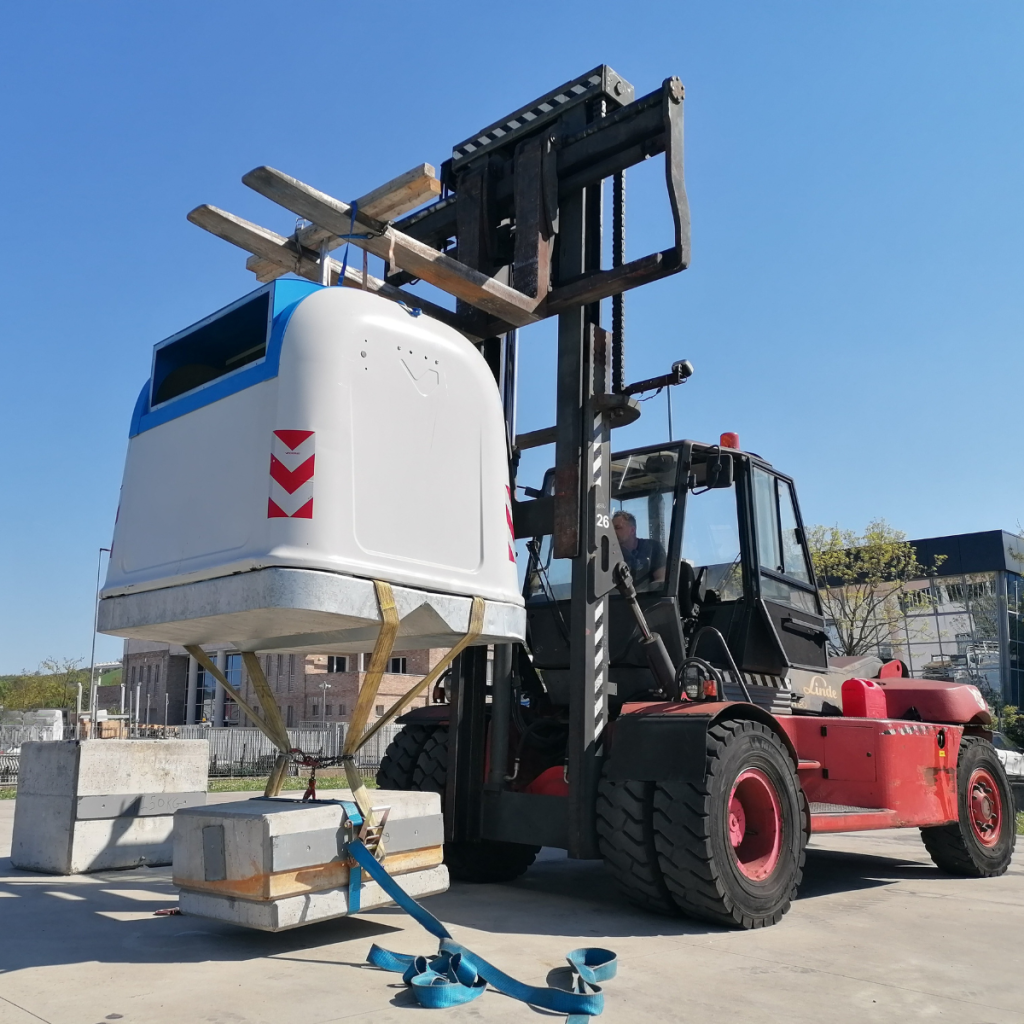
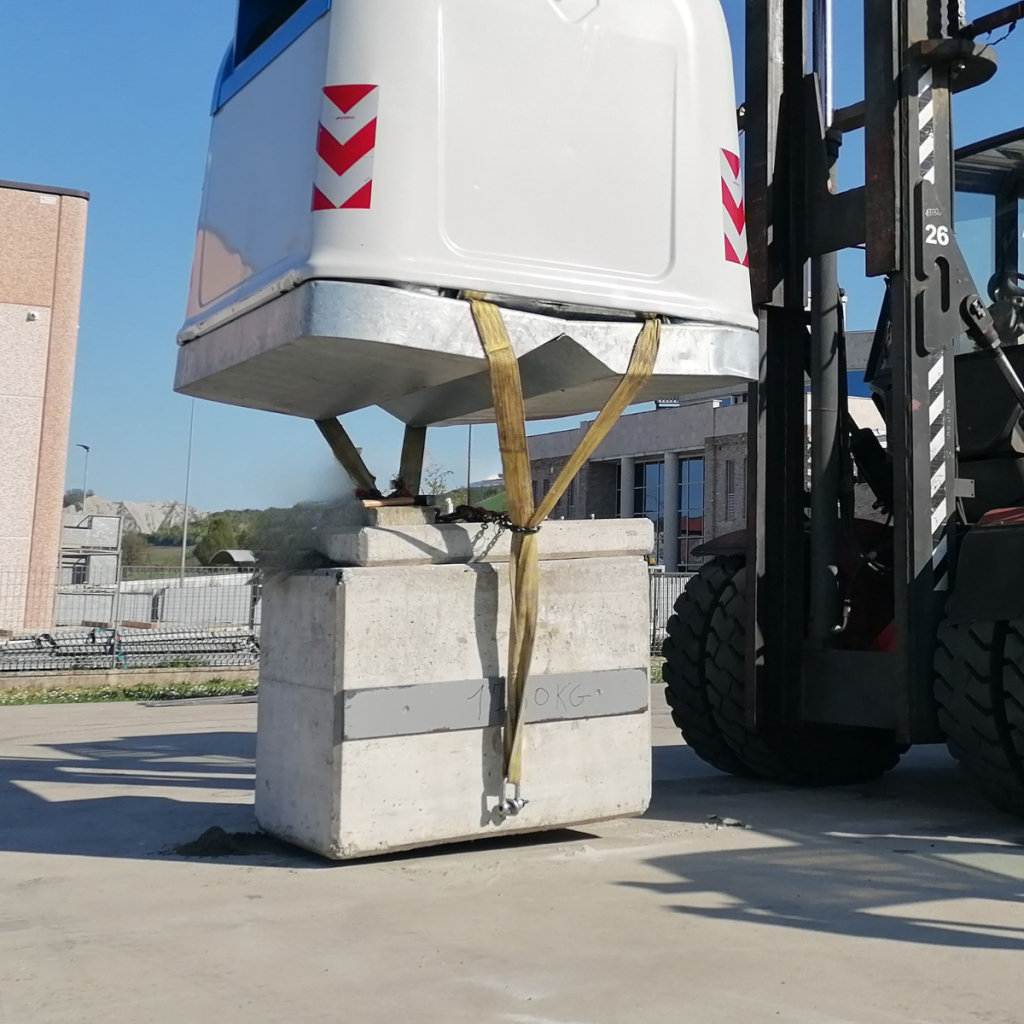
The container’s ability to withstand dynamic and static stresses during emptying phases is critical. The test involves loading the container with a ballast mass calculated based on its volumetric capacity.
To ensure a margin of error that covers accidental overloading or material wear, a safety factor of 1.25 is applied relative to the nominal load. During the test, the container is lifted and kept suspended; the structure, lifting points, and floor closing mechanisms must not show any permanent deformations or breakages that could compromise future use or safety.
STRENGTH TESTS FOR HINGES AND STOPS
Even more critical is the test that simulates the extreme stress conditions to which moving components are subjected during discharge. In this scenario, the strength of the end stops and hinges is verified as the bottom opens abruptly under the weight of the waste.
In this configuration, the standard mandates a safety factor of 1.5. The test requires the container floor to be released at the maximum speed permitted by the mechanism, verifying that the stopping elements absorb the kinetic energy without failure. This rigor ensures that, even with particularly heavy or compacted materials, the container remains intact, preventing the risk of falling metal components or the malfunction of closing systems.
CONCLUSIONS AND COMPLIANCE
The adoption of these factors (1.25 for static lifting and 1.5 for the dynamic stress of the stops) ensures that every container placed on the market is capable of handling intensive work cycles in urban environments. For manufacturers, passing the tests required by UNI EN 13071-1:2019 is not only a regulatory obligation but a guarantee of reliability and the prevention of workplace accidents.
CONTACT US FOR MORE INFORMATION
Relying on ECM means choosing an expert technical partner capable of ensuring regulatory compliance.
Contact us to request a personalized quote.