


Why Impact Testing and the ‘Ballistic Test’ are essential
26 May 2026
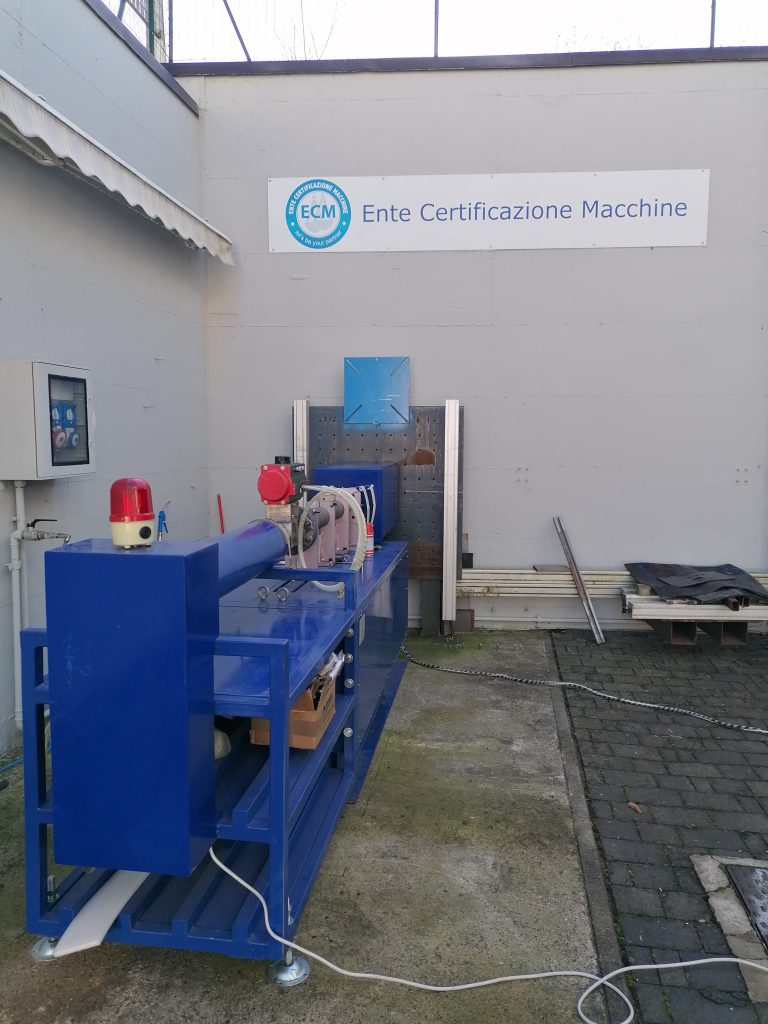
Occupational safety in the industrial sector largely depends on the reliability of the guards installed on machinery. Unfortunately, many guards do not undergo rigorous testing, exposing operators to unacceptable residual risks, especially in the event of ejected objects or the breakage of internal components. Failure to comply with standards exposes companies to severe safety issues, regulatory non-compliance, and potentially, accidents.
GUARD RELIABILITY: THE RISK OF UNTESTED PROTECTIONS
The design of effective guards is a fundamental requirement of the Machinery Directive 2006/42/EC and the future Machinery Regulation (EU) 2023/1230. Simply installing a guard is not enough; demonstrating its mechanical strength is crucial.
Many manufacturers limit themselves to declarations of conformity without performing objective laboratory tests. This creates a dangerous gap between safety expectations and reality: an untested guard could fail at the critical moment, turning a protective measure into a false sense of security. Accidents caused by material ejection or broken tools can have dramatic consequences for operators.
ENTE CERTIFICAZIONE MACCHINE (ECM): GUARANTEE OF SAFETY AND COMPLIANCE
In this context, relying on an independent and accredited body like Ente Certificazione Macchine (ECM) represents a strategic and responsible choice. ECM is a Notified Body and an Accredited Testing Laboratory, specializing in testing and certification activities for the industry.
The advantage of ECM lies in conducting targeted impact testing in compliance with the ISO 14120 standard. These tests go beyond simple dimensional verification, analyzing the actual structural capacity of guards to withstand the most hazardous stresses.
THE PROJECTILE TEST (IMPACT TESTING): VERIFYING INTERNAL RESISTANCE
The most significant test for simulating hazards inside the machine is the so-called ‘Ballistic Test’ or Projectile Test. This test is specifically designed to evaluate the resistance of guards against impacts originating from within the danger zone.
ECM performs this verification using a dedicated compressed-air device (a ‘cannon’) that fires an object (the projectile) against the guard, simulating the impact of any items ejected at high speed, such as splinters, broken tool pieces, or debris. The objective is to ensure that the guard maintains its structural integrity and prevents the projectile from reaching the operator’s area. This advanced tool, available in only a few European laboratories, ensures an objective assessment in compliance with the standard.