


Safety of protective devices: the pendulum impact test in our laboratory
15 January 2026
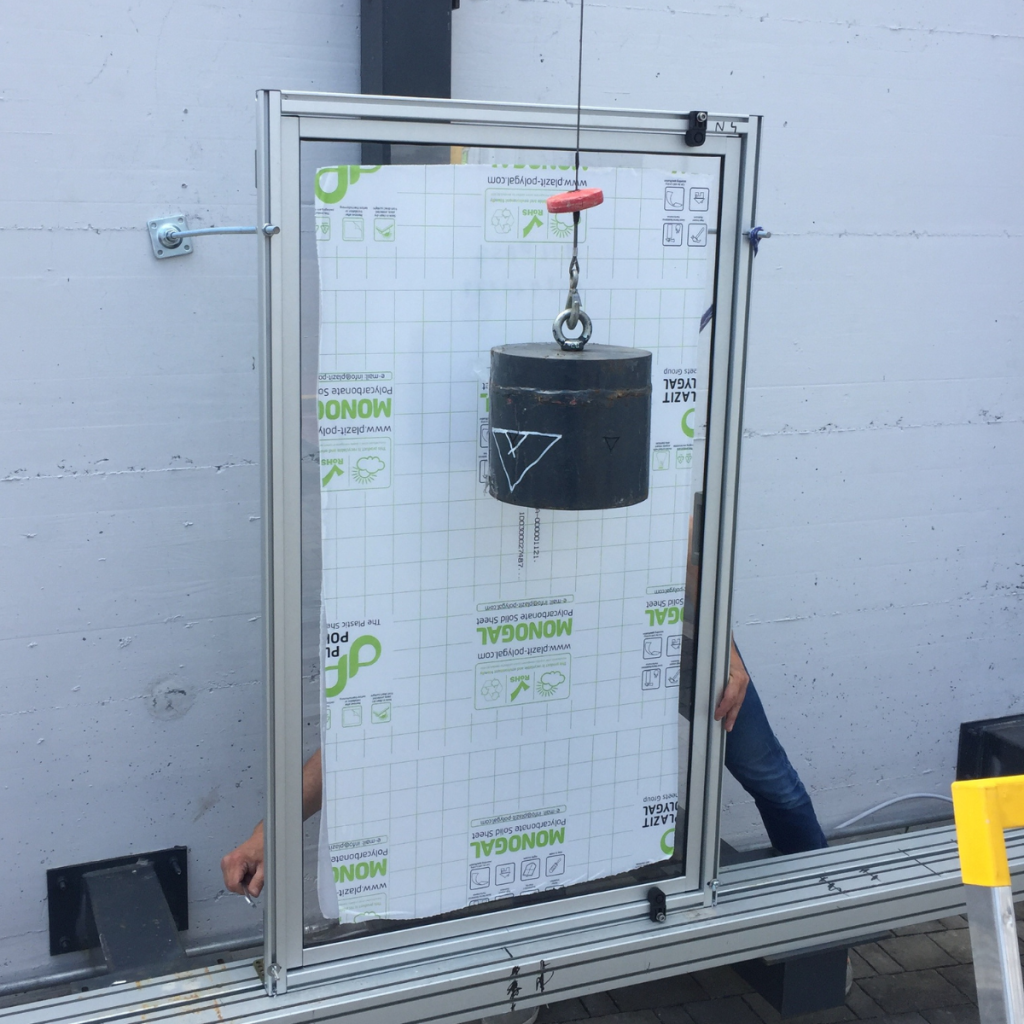
The safety of industrial operators depends largely on the ability of guards (whether metal mesh, polycarbonate panels, or safety glass) to withstand accidental impacts. To ensure that a protective barrier complies with current regulations, it is essential to subject it to dynamic resistance tests.
At our laboratory, we perform impact tests using the pendulum method, a rigorous procedure that simulates the collision of a body against the protective structure.
WHAT THE PENDULUM TEST INVOLVES
The test aims to verify the mechanical strength of the panel and its fastening systems (uprights, clips, screws). The test consists of dropping an impact body (the pendulum) from a predetermined height, causing it to collide with the center of the shelter or at the points considered most critical.
Based on regulations and customer specifications, we use different types of impact to simulate real-life scenarios.
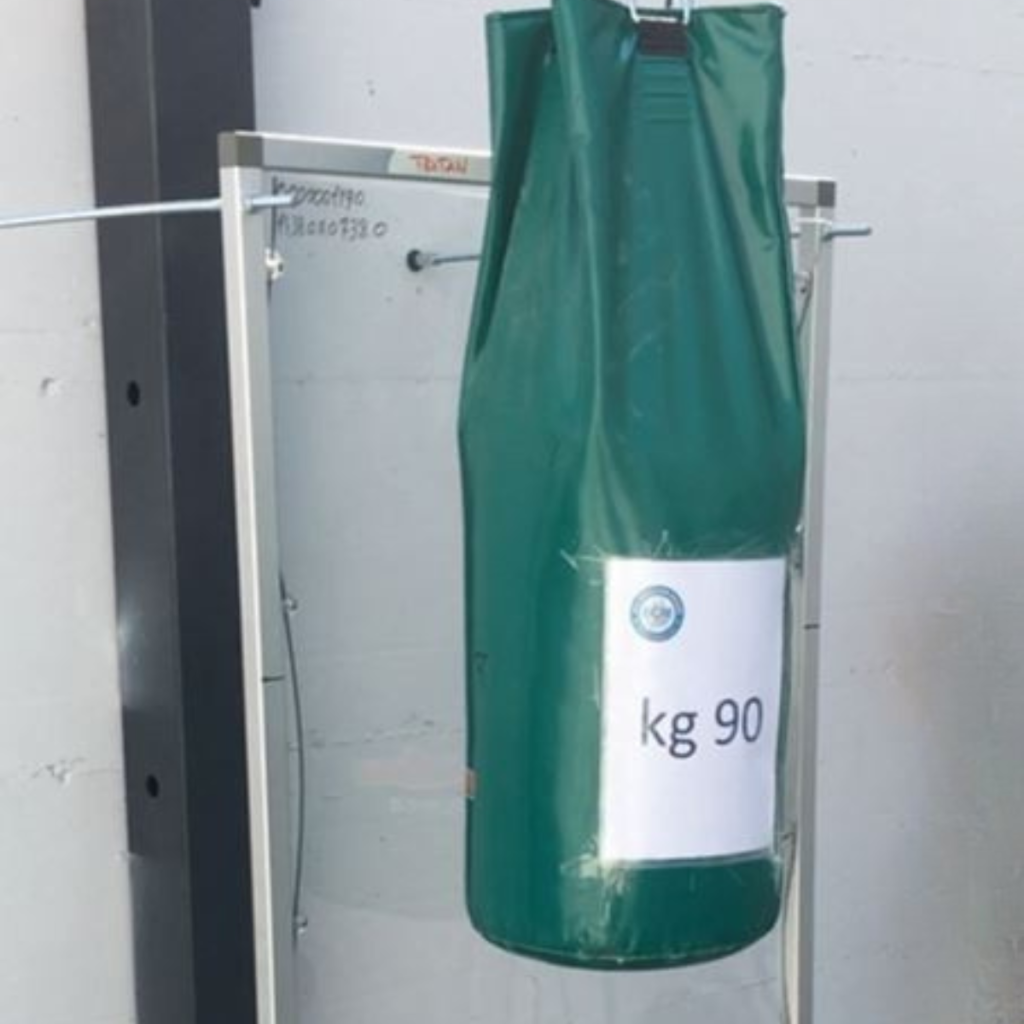
Soft Body Test (Human Impact Simulation)
A large flexible bag is used to simulate the accidental impact of an operator falling against the guard.
Objective: To verify that the guard does not detach and that deformation does not allow the body to pass through the barrier or come into contact with the hazardous area.
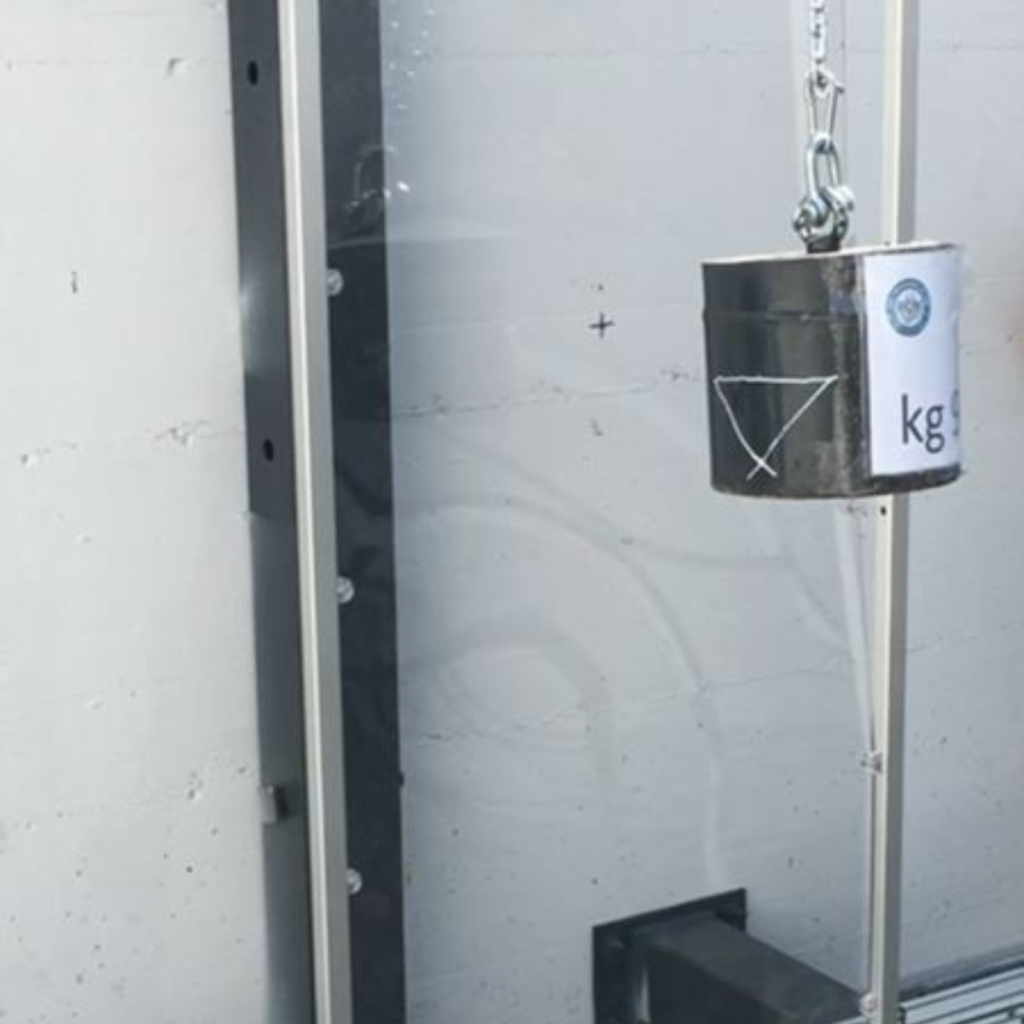
Test with “Hard” Body (Simulation of object projection)
The test is performed with a rigid metal weight. This impact body simulates the projection of a mechanical component or workpiece that detaches from the machine.
Structural strength: The test shows whether the panel material (e.g., a polymer) tends to crack or whether the restraint systems fail under impulse loading.
Multiple impacts: Tests can be repeated to test the fatigue of the material.
WHAT IS IMPORTANT TO NOTE
During testing, our technicians analyze various factors:
- Residual Deformation: We measure how much the panel has moved from its original position to ensure that safety distances are always maintained.
- Panel Integrity: The material must absorb energy without fragmenting in a dangerous manner.
- Fastening strength: It is essential that the panel remains anchored to the supporting structure. Any failure of the supports indicates the need to redesign the containment system.
WHY CERTIFY YOUR SHELTERS
Performing an impact test in our certified laboratory is not only a regulatory requirement, but also a guarantee of quality for machinery manufacturers and a moral duty towards worker safety.
Our technical reports provide the data necessary for CE marking and risk assessment validation, ensuring that the protection installed is truly effective against mechanical hazards.
CONTACT US FOR MORE INFORMATION
Relying on ECM means choosing an expert technical partner capable of guaranteeing regulatory compliance, reliability, and guaranteed delivery times. Contact us to request a personalized quote.