


The voices of the Memorandum of Understanding (MoU) with the Korea Total Healthcare Ecosystem Association (KoTHEA): Heekyung Jung – Secretary General of KoTHEA
12 June 2026
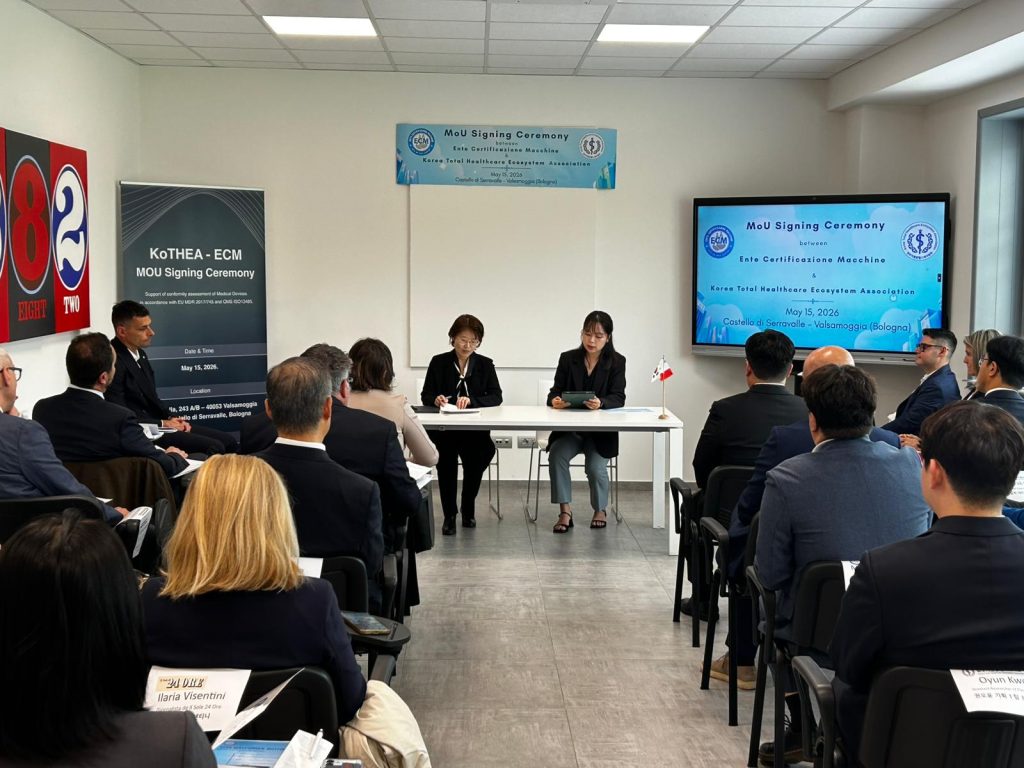
A new era of international cooperation in the digital health sector begins. During the official ceremony held at our headquarters in Valsamoggia, the Korea Interministerial Healthcare Association (KOTHEA) and the European notified body ECM signed a crucial Memorandum of Understanding (MoU). The agreement aims to facilitate the access of Korean medical technologies into the European market.
The next steps will involve close collaboration on the ground, led by KoTHEA’s Secretary General, Heekyung Jung, who attended the event in Italy to seal the launch of this practical cooperation.
THE SECRETARY GENERAL’S ADDRESS: A BRIDGE BETWEEN KOREA AND EUROPE
During her address, Secretary General Heekyung Jung first conveyed the greetings of the association’s President, Ki-jun Shim, who was unable to attend, and took the opportunity to warmly thank the ECM team for their hospitality and the organization of the meeting. Jung wished to reaffirm that KoTHEA’s determination and expectations toward this partnership remain firm and strategic.
Delving into the core institutional objectives, the Secretary General recalled KoTHEA’s ongoing commitment—directly backed by the Korean Ministry of Trade, Industry and Energy, and the Changwon Special Metropolitan City—to guiding Seoul’s promising digital health enterprises toward the global market, ready to demonstrate the objective value of their innovative technologies.
The core of the partnership lies in overcoming regulatory hurdles. Jung highlighted that the recent tightening of requirements to obtain the European CE certification poses a complex challenge for many Korean companies. In this scenario, collaborating with a highly competent notified body like ECM becomes an extremely effective support measure: a solid operational bridge capable of ensuring the safe entry of Korean medical devices into Europe and creating a model of success for the entire global medical industry.
FROM SIGNING TO RESULTS: A GLOBAL GROWTH MODEL
In the intentions of the signatories, this MoU will not remain a mere formal promise on paper. The agreement is designed as a solid operational bridge to transfer Korean technological excellence for the benefit of the health and quality of life of European citizens. Moving forward, the two institutions will work synergistically to build a model of success in medical innovation and global cooperation.